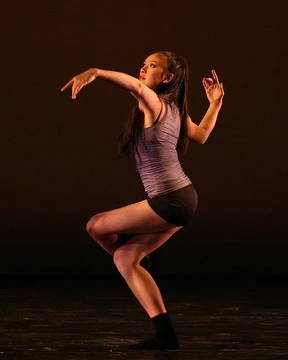
Carmen Amaya
Spanish Romani flamenco dancer who revolutionized footwork.

Carmen Amaya Amaya (2 November 1918 – 19 November 1963), nicknamed La Capitana, was a Spanish Romani flamenco dancer and singer, born in the Somorrostro district of Barcelona, Catalonia, Spain. She is often hailed as "the greatest Flamenco dancer ever" and "the most extraordinary personality of all time in flamenco dance." She was the first female flamenco dancer to master footwork previously reserved for the best male dancers, due to its speed and intensity. She sometimes danced in high-waisted trousers as a symbol of her strong character.
- born
- 2 November 1918 (disputed; some sources cite 1918 based on 1930 census and other
- died
- 19 November 1963
- field
- Flamenco dance and singing
- nationality
- Spanish
- known_for
- First female flamenco dancer to master male footwork; sometimes danced in high-w
Verified Timeline
Lore & Background
Carmen Amaya was born to a Romani family in Somorrostro, Spain, the second of eleven children, although only six survived to adulthood. Her father José Amaya Amaya, a guitarist, and mother Micaela Amaya Moreno raised her. She entered the flamenco world as a child, accompanying her father at night as he played guitar while she performed; afterwards they begged and picked the small change the public threw on the floor. She soon earned her first nickname, "La Capitana." Her date of birth is disputed. Researchers Montse Madridejos and David Pérez Merinero name 1918 as her year of birth, citing Barcelona's 1930 inhabitants list mentioning a 12-year-old Carmen Amalla, and a 1920 oil painting showing a 2-3 year old girl with her mother. Madridejos notes that her Romani ethnicity could have been a factor: "At that time, a gypsy was neither baptized, nor registered." In 2023, Madridejos published an academic article giving more weight to 1918 as the possible year of birth. Her career advanced when businessman Josep Santpere introduced her to more prestigious venues, leading to her debut at the Spanish Theatre in Barcelona and later the Palace Theatre in Paris. In 1931, art critic Sebastià Gasch wrote the first print article about her in the weekly Mirador, describing her dance as "Indescribable. Soul. Pure Soul. Feeling made flesh" and noting "the unprecedented brutality and incredible precision" of her footwork. Businessman Vicente Escudero saw her and predicted she would bring a flamenco revolution by synthesizing traditional and variety-show styles. In 1930, she performed with the Manuel Vallejo company across Spain, and later at the Zarzuela Theatre in Madrid with Conchita Piquer and Miguel de Molina, achieving nationwide success. During the Spanish Civil War, in 1936, she and her troupe crossed from Spain to Portugal and sailed for Buenos Aires on the ship Monte Pascoal. She debuted at the Maravillas Theatre with Ramón Montoya and Sabicas. She added family members to her group, made films in Buenos Aires with Miguel de Molina, and won admiration from musicians Arturo Toscanini and Leopold Stokowski. Her success was so great that a theater was built bearing her name: el Teatro Amaya. She maintained a personal relationship with Sabicas for nine years, splitting in Mexico. In the United States from 1941, she performed at Carnegie Hall with Sabicas and Antonio de Triana, met President Franklin Roosevelt, who gave her a bowling jacket with brilliants and invited her to dance at the White House. She returned to Europe, performing at the Théâtre des Champs-Élysées in Paris and later in London, where she met the Queen of the United Kingdom.
Reader's Guide
Carmen Amaya's significance lies in her transformation of flamenco dance, particularly as the first female to master the rapid, intense footwork previously reserved for male dancers. Her performances, characterized by improvisation and raw power, were praised by Arturo Toscanini, who declared he had never seen an artist with more rhythm and more fire. Her international tours across Latin America, the United States, and Europe from the 1930s through the 1950s brought flamenco to global audiences. She performed for heads of state including President Franklin Roosevelt and the Queen of the United Kingdom. Her legacy is preserved in the few films she starred in, from her first performance in 1935 to her last in Los Tarantos, which showcase the purest form of flamenco. The construction of the Teatro Amaya in Buenos Aires underscores her lasting impact. Her disputed birth year, tied to her Romani heritage and lack of official records, highlights broader historical issues of documentation for marginalized communities.
Did You Know?
- Carmen Amaya was nicknamed 'La Capitana' from her childhood, when she performed with her father and begged for coins.
- Arturo Toscanini declared after seeing her dance that he had never seen an artist with more rhythm and more fire.
- A theater in Buenos Aires was built bearing her name: el Teatro Amaya.
- She met President Franklin Roosevelt, who gave her a bowling jacket with brilliants and invited her to dance at the White House.
- Her date of birth is disputed; researcher Montse Madridejos argues for 1918, noting that at the time 'a gypsy was neither baptized, nor registered.'
More in Dance Pioneers 1-23
Spotted an error? Know more?
This is a living reference — every entry is fact-audited, and reader corrections feed straight into our audit queue. Suggest an edit · See this site's audit record