Agnes de Mille
American choreographer who integrated dance into Broadway storytelling.

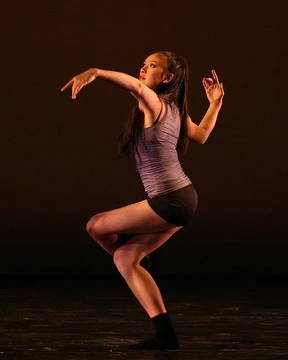
Agnes George de Mille was an American dancer and choreographer who revolutionized musical theater by integrating dance into plot and character development. She is best known for her work on Broadway, particularly the musical Oklahoma!
- field
- Dancer, choreographer
- nationality
- American
- known_for
- Choreographing Oklahoma! and Rodeo; integrating dance into musical theater plot
Lore & Background
Agnes de Mille was born in New York City into a family of theater professionals, including her father William C. deMille and uncle Cecil B. DeMille, both Hollywood directors. She originally wanted to be an actress but was told she was 'not pretty enough,' so she turned to dance. Despite lacking flexibility and technique, she developed strong character work by observing film stars on her father's sets.
Reader's Guide
Agnes de Mille's significance lies in her transformation of dance in musical theater. Her choreography for Oklahoma! This innovation is widely credited with starting her fame and influencing Broadway. De Mille served on the National Advisory Committee on the Arts under President John F. Kennedy and later on the National Endowment for the Arts under President Lyndon B. Johnson. Her legacy includes preserving her choreography through assistants and her writings, including the memoir Dance to the Piper and a biography of Martha Graham.
Did You Know?
- De Mille was the granddaughter of economist Henry George.
- She was appointed to the National Advisory Committee on the Arts by President John F. Kennedy.
Family & Lineage
Agnes de Mille entered the world into one of America's most culturally prominent theatrical households. The de Mille name thus spans multiple generations and multiple disciplines of American entertainment. The family's domestic base was in Pompton, New Jersey, where much of their private life unfolded and where, in the end, the family's most devastating losses would be felt.
The Dancer & Choreographer
In the family record, Agnes de Mille is identified by her craft: she was a dancer and choreographer. This designation places her squarely within the performing-arts tradition that defined the de Mille household, a lineage running through her father Henry's work as a dramatist, his collaborations with playwrights such as David Belasco and Steele MacKaye, and the bustling theatrical world of the Madison Square Theatre and the old Lyceum. Where her brothers Cecil and William would channel their creative inheritance into the emerging medium of cinema, Agnes's path pointed toward the body and the stage — the kinetic, physical art form of dance. The de Mille name, in this telling, encompasses not only the written word and the projected image but also choreographed movement, suggesting a family whose creative output spanned the full range of theatrical expression. Agnes's role as choreographer marks her as the one who gave the de Mille legacy its most embodied, physical dimension.
A Life Cut Short
The de Mille family endured a devastating sequence of losses in the early 1890s. His widow Bebe was left to raise their children — William, Cecil, and the young Agnes — and within two months of her husband's passing she founded the Henry C. De Mille School for Girls in Pompton and opened an office on Broadway, becoming only the second woman playbroker in America. But the family's grief was far from over. Just two years after Henry's death, Agnes fell victim to spinal meningitis and did not survive. She was barely a child when the disease claimed her, robbing the de Mille household of its youngest member and leaving Bebe to carry on alone with the two boys who would go on to make their own mark in American entertainment.
The De Mille Cultural World
Agnes de Mille was born into a household where the stage was not merely a career but a way of life. He went on to write original works such as John Delmer's Daughters and Main Line, and collaborated with David Belasco on productions including The Wife, Lord Chumley, The Charity Ball, and Men and Women. The family's world was one of curtain calls, box-office receipts, and the electric anticipation of opening night. Agnes grew up — however briefly — in the orbit of this theatrical ecosystem, in a family where playwriting, acting, and performance were the daily currency. Her later identification as a dancer and choreographer suggests she inherited that same creative impulse, translating the de Mille theatrical sensibility into movement rather than text.
More in Dance Pioneers 1-23
Spotted an error? Know more?
This is a living reference — every entry is fact-audited, and reader corrections feed straight into our audit queue. Suggest an edit · See this site's audit record