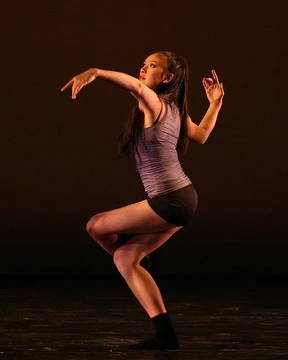
Bill T. Jones
American choreographer and co-founder of the Bill T. Jones/Arnie Zane Dance Company.

He is the co-founder of the Bill T. Jones/Arnie Zane Dance Company and Artistic Director of New York Live Arts. His work often explores themes of identity, race, sexuality, and social issues, and he has choreographed for major performing arts ensembles, Broadway, and other theatrical productions.
- field
- Choreography, dance, directing, writing
- nationality
- American
- known_for
- Co-founder of Bill T. Jones/Arnie Zane Dance Company; Artistic Director of New York Live Arts; choreographic works such as Last Supper at Uncle Tom's Cabin/The Promised Land and Still/Here
Lore & Background
Bill T. Jones was born in Bunnell, Florida, the tenth of twelve children to migrant farm workers who later worked in factories. In high school, he was a track star and participated in drama and debate. After a year in Amsterdam, they returned and connected with dancer Lois Welk, who introduced them to contact improvisation. Their duets, such as Blauvelt Mountain, Monkey Run Road, and Valley Cottage, established their reputations.
Reader's Guide
Bill T. Jones's significance lies in his role as a choreographic provocateur who used dance to confront issues of identity, race, sexuality, and social justice. As co-founder of the Bill T. Jones/Arnie Zane Dance Company, he created works that combined movement with spoken passages, exploring personal and political themes. His piece Last Supper at Uncle Tom's Cabin/The Promised Land, created after Zane's death, examined race, gender, and commonality through four acts, including a controversial nude section. Jones's work often featured nontraditional performers and addressed topics such as homophobia, AIDS, and censorship. He also serves as Artistic Director of New York Live Arts, overseeing its presenting season, education programming, and artist services. His legacy includes influencing contemporary dance by integrating personal narrative, social commentary, and diverse body types into performance.
Did You Know?
- Jones's work Last Supper at Uncle Tom's Cabin/The Promised Land includes a section called The Promise Land that features nudity and was not always performed.
- Jones is Artistic Director of New York Live Arts, which includes an annual presenting season and education programming.
The Convergence of Three Disciplines
Bill T. Jones occupies a rare and demanding intersection in the performing arts: he is simultaneously a dancer, a choreographer, and an artistic director. Each of these roles carries its own distinct set of responsibilities and creative demands. As a dancer, he commits his body to the physical expression of movement, serving as both instrument and interpreter. As a choreographer, he steps behind the scenes to compose sequences of motion, shaping how bodies tell stories in space and time. As an artistic director, he assumes the broader leadership mantle—curating a vision, guiding an ensemble, and stewarding the institutional identity of a dance organization. Holding all three titles at once means that Jones does not merely participate in dance from one vantage point; he inhabits it from the stage, the studio, and the boardroom. This triple identity suggests a practitioner for whom the boundaries between making, performing, and leading a dance enterprise are not walls but permeable membranes, each informing and enriching the others in a continuous creative loop.
An American Voice in the Dance World
The record identifies Bill T. Jones as an American, a designation that situates his work within the broader landscape of United States dance culture. America has long been a crucible for dance innovation, a place where diverse traditions collide and new forms emerge. For a choreographer and dancer operating in that national context, the creative environment is shaped by the country's pluralistic energy—its mix of influences, its appetite for experimentation, and its history of artists pushing against established conventions. Jones's American identity also frames his work within a tradition where dance has served as a vehicle for personal and collective expression, a medium through which individuals and communities articulate identity, resistance, and joy. As an artistic director in this national setting, he would have navigated the particular ecosystem of American arts funding, institutional structures, and audience expectations, all while maintaining the creative freedom that defines the choreographic and performative aspects of his practice. His career thus exists at the intersection of individual artistic vision and the broader cultural currents of a nation.
Distinguished Among Many: The Name Bill Jones
The name Bill Jones appears with remarkable frequency across the annals of American and international public life. In sports alone, it belongs to basketball pioneers, college coaches who led teams to national titles, Major League Baseball players from the 1880s, Australian rules footballers spanning several decades, English footballers, a speed skater, and a sportscaster. In politics, it is the name of a California Secretary of State and a Mississippi state representative. In the arts, it identifies a New York-based photographer and installation artist as well as an English folk singer. The middle initial sets him apart from the dozens of other Bill Joneses, and his triple role in dance distinguishes him from the single-discipline athletes, politicians, and musicians who share his first and last name. In a disambiguation list that spans steelmaking, trade unionism, and riverboat gambling, his place among the artists is a quiet but meaningful claim to a different kind of legacy.
Born in 1952: A Career Rooted in a Turning Era
This is the era of postwar cultural transformation, a period when the arts in America were undergoing profound shifts in subject matter, audience, and institutional support. A dancer and choreographer coming of age in the 1960s and 1970s would have been shaped by a cultural moment defined by questioning established norms, expanding the boundaries of what the body could express, and redefining who the arts were for. The fact that Jones went on to assume the role of artistic director suggests a career that extended well beyond the purely performative, evolving into one of institutional leadership and long-term artistic stewardship. The longevity implied by a career that began in the latter half of the twentieth century and continued into the twenty-first speaks to a sustained commitment to the craft.
More in Dance Pioneers 1-23
Spotted an error? Know more?
This is a living reference — every entry is fact-audited, and reader corrections feed straight into our audit queue. Suggest an edit · See this site's audit record