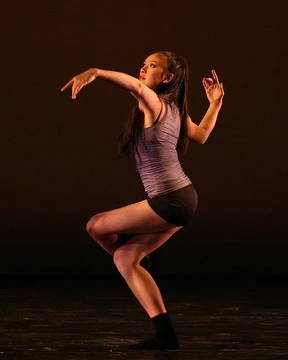
Birju Maharaj
Leading exponent of Lucknow Kalka-Bindadin Gharana of Kathak dance.

He was a descendant of the renowned Maharaj family of Kathak dancers, which includes his two uncles, Shambhu Maharaj and Lachhu Maharaj, and his father and guru, Acchan Maharaj. He also practiced Hindustani classical music and was a vocalist.
- field
- Kathak dance, choreography, composition, Hindustani classical music
- nationality
- Indian
- known_for
- Leading exponent of Lucknow Kalka-Bindadin Gharana of Kathak; choreography for films such as Devdas, Bajirao Mastani, and Vishwaroopam
Lore & Background
His father was the Kathak exponent Jagannath Maharaj, popularly known as Acchan Maharaj of the Lucknow gharana and the Kalka-Bindadin family. His father served as the court dancer in Raigarh princely state. Maharaj started dancing at age four, trained by his uncles Lachhu Maharaj and Shambhu Maharaj and his father. He first performed at his father's concerts and gave a solo performance at age seven in West Bengal. His father died when Maharaj was nine. Maharaj began teaching Kathak at age fourteen at Sangeet Bharti in New Delhi. He brought knowledge of Hindustani classical music and percussion instruments to his performances, and was noted for singing thumri while dancing and playing tabla and dholak. His Kathak incorporated contemporary elements including stories from daily life and social issues. He collaborated with tabla player Zakir Hussain and singers Rajan and Sajan Mishra. His students included Priti Singh, Saswati Sen, Aditi Mangaldas, Saju Ahammed, and Nisha Mahajan.
Reader's Guide
Birju Maharaj's significance lies in his role as a leading exponent and teacher of the Lucknow Kalka-Bindadin Gharana of Kathak, a tradition he inherited from his father and uncles. He shaped the institutional teaching of Kathak at the Kathak Kendra in New Delhi, where he served as head for many years, and later founded his own school, Kalashram. His legacy includes not only his performances but also his choreography for major Indian films, which brought Kathak to wider audiences. His work incorporated contemporary themes and social issues into traditional Kathak, and his ginti ki tihaais became a study subject for students. After his death, allegations of sexual harassment by former students and other women emerged on social media, prompting discourse on power imbalances in the Guru-shishya tradition and institutional redressal mechanisms in the performing arts.
Did You Know?
- Birju Maharaj started dancing at age four and performed solo at age seven in West Bengal.
- He was one of the youngest artists to receive the Sangeet Natak Akademi Award, at age 28.
- After his death, multiple women came forward on social media with allegations of sexual harassment by him.
The Kathak Lineage at Shriram Bharatiya Kala Kendra
Within the walls of Shriram Bharatiya Kala Kendra, one of the most significant teacher lineages in Kathak history took root. Shambhu Maharaj, widely regarded as a noted Kathak guru, took up a teaching position at the Kendra, and with him came his nephew, Birju Maharaj, who also contributed as a teacher in the institution's Kathak wing. The institution's Kathak program would later be absorbed by the Sangeet Natak Akademi and relocated to the nearby Mandi House area, where it evolved into the National Institute of Kathak Dance. For Birju Maharaj, the years spent teaching alongside his uncle at the Kendra represented the crucible in which his artistry was refined and passed on to successive generations of students.
A Guru Among the Era's Distinguished Faculty
Among the noted musicians, singers, and dance gurus who contributed their expertise to the institution's faculty was Birju Maharaj. He stood alongside luminaries such as Siddheshwari Devi, his uncle Shambhu Maharaj, Munna Shukla, and Leela Samson, all of whom lent their considerable talents to the Kendra's mission of imparting training in Indian classical dance styles and music. By the time Birju Maharaj was part of its faculty, the Kendra offered instruction in a wide array of disciplines, including Kathak, Bharatanatyam, Odissi, Chhau, and Hindustani Classical music in both vocal and instrumental forms. His presence at the Kendra placed him at the heart of Delhi's cultural ecosystem, in the Mandi House area, a neighborhood that would become synonymous with the city's performing arts tradition.
The First Sumitra Charat Ram Award for Lifetime Achievement
The timing of the award thus held a poignant resonance, arriving just months before the founder's death. By selecting Birju Maharaj as the inaugural recipient, the Kendra recognized a guru who had been intimately connected to its walls, having taught alongside his uncle Shambhu Maharaj in the institution's Kathak wing. The following year, the award was presented to the renowned vocalist Kishori Amonkar, establishing a pattern of honoring the very artists whose contributions had helped define the Kendra's legacy. For Birju Maharaj, receiving this distinction from the institution where he had spent years as a teacher represented a full-circle acknowledgment of his lifelong dedication to the Kathak tradition.
The Institution as a Living Archive
Birju Maharaj's association with Shriram Bharatiya Kala Kendra situates him within a broader institutional framework that continues to shape Indian performing arts. The neighborhood also houses the Sangeet Natak Akademi, the Lalit Kala Akademi, the National School of Drama, and the Triveni Kala Sangam, making it the undisputed cultural hub of the capital. The Kendra itself maintains two operational sections: the College of Music and Dance, which offers courses in Kathak, Bharatanatyam, Odissi, Chhau, ballet, and contemporary dance alongside Hindustani vocal and instrumental training, and the Performing Arts Section, which stages productions across the country. The institution also preserves a library containing a large and rare collection of books, audio and visual recordings, and extensive archives, as well as an art gallery on its ground level. Birju Maharaj's years of teaching at this institution contributed to a living tradition that the Kendra continues to sustain.
More in Dance Pioneers 1-23
Spotted an error? Know more?
This is a living reference — every entry is fact-audited, and reader corrections feed straight into our audit queue. Suggest an edit · See this site's audit record