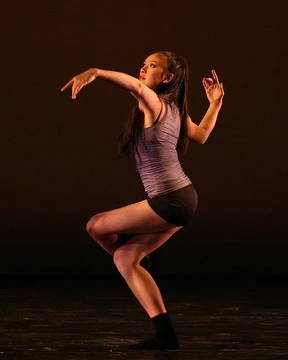
Antonio Gades
Spanish flamenco dancer who popularized the art internationally.

Antonio Esteve Ródenas, known professionally as Antonio Gades, was a Spanish flamenco dancer and choreographer. He helped to popularize flamenco on the international stage through his dance adaptations of literary and musical works.
- field
- Flamenco dancer and choreographer
- nationality
- Spanish
- known_for
- Dance adaptations of Carmen, Blood Wedding, and El amor brujo; co-founder of Ballet Nacional de España
Lore & Background
He became a prominent flamenco dancer and choreographer, creating notable works including dance adaptations of Prosper Mérimée's Carmen and Federico García Lorca's Blood Wedding, as well as a feature-length adaptation of Manuel de Falla's ballet El amor brujo. In the 1990s, he toured the world with his show Fuenteovejuna, based on Lope de Vega's play. Gades collaborated with Spanish director Carlos Saura in filming the adaptations of Carmen and Blood Wedding, which also featured Cristina Hoyos. Politically active, he proclaimed self-determination for the Catalan nation during the Spanish Transition and was a member of the Central Committee of the Communist Party of Spain (PCE). He was married to actress and singer Marisol for four years, with whom he had three daughters, including actress María Esteve and singer Celia Flores. About six weeks before his death, he received the Order of José Martí from Fidel Castro in Havana, Cuba. His ashes were interred at the Mausoleum of the Frank País Second Eastern Front in Santiago de Cuba.
Reader's Guide
Antonio Gades played a key role in bringing flamenco to global audiences through his choreographic adaptations of classic works. His dance versions of Carmen, Blood Wedding, and El amor brujo, often filmed with director Carlos Saura, became internationally recognized. His political activism, including his advocacy for Catalan self-determination and membership in the Communist Party of the Peoples of Spain, marked him as a figure engaged with the social changes of the Spanish Transition. His legacy is also carried by his daughters, actress María Esteve and singer Celia Flores. The honor of the Order of José Martí from Cuba and his interment in Santiago de Cuba reflect his international connections. Gades remains a significant figure in the history of flamenco and Spanish dance.
Did You Know?
- He was a member of the Central Committee of the Communist Party of Spain (PCE).
- About six weeks before his death, he received the Order of José Martí from Fidel Castro in Havana.
- His ashes were interred at the Mausoleum of the Frank País Second Eastern Front in Santiago de Cuba.
The Master's Journey East
Antonio Gades is recorded among the Spanish flamenco masters who carried the art form across the Pacific to Japan, a country that would eventually be regarded as the second homeland of flamenco. The art first touched Japanese soil in the 1920s, when the bailaora Antonia Mercé, known as La Argentina, toured the country and reportedly captivated audiences with material drawn from the film El amor brujo and from Andalusian traditions. By the time Gades made his own journey to the Japanese stage, the art had already taken root and begun to evolve within that culture. His travels were not an isolated event but part of a broader wave of Spanish performers bringing their craft to a new audience. The fact that a figure identified specifically as a flamenco master chose to present his work in Japan speaks to the growing international appetite for the art during the mid-twentieth century, and positions Gades as one of the conduits through which flamenco's expressive vocabulary reached listeners and viewers far from the Andalusian stage where it was born.
The Late 1950s: A Peak of Expansion
The period during which Antonio Gades traveled to Japan coincided with what is described as the time of maximum expansion for flamenco in that country, the late 1950s. This was not a quiet, gradual seepage of influence but a concentrated surge in which multiple Spanish companies and individual masters crossed to present and teach the art. When Gades and his contemporaries arrived in the late 1950s, they stepped into a landscape where Japanese audiences already possessed a foundational familiarity with flamenco, making the reception of a master's performance a natural continuation of a dialogue that had been building for over three decades.
Among the Masters: A Collective Cultural Mission
Antonio Gades is named in the same breath as a distinguished roster of Spanish flamenco figures who made the journey to Japan: Pilar López, Manolo Vargas, Roberto Ximénez, Luisillo, Rafael Romero, Merche Esmeralda, El Güito, and Paco de Lucia. This grouping underscores that Gades's presence in Japan was part of a collective cultural mission rather than a solo venture. These were not minor performers but recognized masters and established companies, each bringing a distinct facet of the art—dance, song, guitar, choreography—to a foreign stage. The breadth of the group suggests a coordinated or at least parallel effort to embed flamenco deeply within Japanese artistic life. For Gades, being counted among such names places his Japanese appearances within a tradition of serious, high-level transmission. It also highlights that the art's migration to Japan was not a single charismatic figure's achievement but a layered, multi-voiced export in which each master contributed a particular dimension of the Andalusian tradition to a culture that was actively seeking it out.
A Bridge in a Two-Way Exchange
Antonio Gades's travels to Japan formed one direction of what became a sustained two-way cultural exchange. In the 1950s, Japanese students such as Yasuko Nagamine, Yoko Komatsubara, Masami Okada, and Shoji Kojima made the reverse journey to Spain to deepen their study of flamenco, becoming among the first bailaores to pursue the art at its source. This reciprocal movement—Spanish masters going east, Japanese dancers going west—created a living dialogue that continues to this day, with students still traveling annually to Spain to refine their technique. The resonance between the two cultures is not accidental: the hoarse vocal quality of flamenco cante shares a timbral kinship with traditional Japanese singing, and the rhythmic structures of the art align with what Japanese practitioners describe as an intuitive, almost unconscious physical response to the music. Gades, as one of the masters who helped establish that initial bridge, contributed to a framework in which flamenco in Japan is understood not as mere imitation but as a genuine artistic partnership rooted in shared expressive values of personal growth and emotional freedom.
More in Dance Pioneers 1-23
Spotted an error? Know more?
This is a living reference — every entry is fact-audited, and reader corrections feed straight into our audit queue. Suggest an edit · See this site's audit record