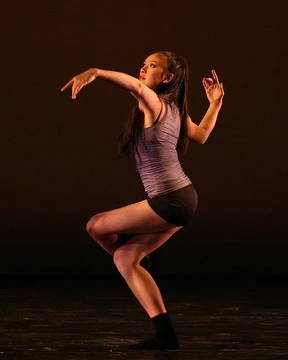
Antony Tudor
English ballet choreographer who transformed ballet into modern art.

Antony Tudor (born William Cook; 4 April 1908 – 19 April 1987) was an English ballet choreographer, teacher and dancer. He founded the London Ballet, and later the Philadelphia Ballet Guild in Philadelphia, Pennsylvania, U.S., in the mid-1950s. Tudor is generally accepted as one of the great originals of modern dance forms. Along with George Balanchine, he is seen as a principal transformer of ballet into a modern art, but of a genius that uses, rather than proceeds from, ballet forms. His work is usually considered as modern 'psychological' expression, but – like their creator – of austerity, elegance and nobility, remarkably primarily using only classical forms.
- born
- 4 April 1908
- died
- 19 April 1987
- field
- Ballet choreographer, teacher, dancer
- nationality
- English
- known_for
- Founding the London Ballet and Philadelphia Ballet Guild; psychological ballets
Verified Timeline
Lore & Background
Tudor was born William Cook in East London, and grew up in the Finsbury area. He discovered dance accidentally. His first exposure to professional ballet was in his late teens when he first saw Sergei Diaghilev's Ballets Russes. He witnessed the dancer Serge Lifar of the Diaghilev Ballet in Balanchine's Apollon Musagète in 1928. Later, the Ballets Russes would introduce him to Anna Pavlova, who further inspired his journey into the world of dance. Tudor reached out to Cyril W. Beaumont, the owner of a ballet book shop in the Charing Cross Road district in London, to seek advice regarding training and was instructed to study with Marie Rambert, a former Diaghilev Ballet dancer who taught the Cecchetti method. Tudor began dancing professionally with Marie Rambert in 1928, becoming general assistant for her Ballet Club the next year. A precocious choreographer, at age twenty-three he created for her dancers Cross Garter'd, then Lysistrata, The Planets and other works at the little Mercury Theatre, Notting Hill Gate, and his two most revolutionary, Jardin aux lilas (Lilac Garden) and Dark Elegies, before the age of thirty, himself dancing the main roles. In 1938, Tudor founded the London Ballet with Rambert members, including his future life partner Hugh Laing, Andrée Howard, Agnes de Mille, Peggy van Praagh, Maude Lloyd and Walter Gore. With the onset of World War II, in 1940 he was invited with them to New York, joining Richard Pleasant's and Lucia Chase's reorganised Ballet Theater. Chase's company was later to become the American Ballet Theatre, with which Tudor was closely associated for the rest of his life. Tudor was a resident choreographer with Ballet Theater for ten years, restaging some of his earlier works but also creating new works, his great Pillar of Fire (1942), Romeo and Juliet, Dim Lustre and Undertow, on that company by the end of the war. Retiring from dancing in 1950, he headed the faculty of the Metropolitan Opera Ballet School, taught at the Juilliard School recurrently from 1950 onwards. He mentored dancers of colour and offered weekly classes at the Philadelphia Ballet Guild, which he established in the mid-1950s. Among others, he taught Carole King, who went on to found the predecessor to the NAISDA Dance College for Aboriginal and Torres Strait Islander students of contemporary dance in Australia. He was artistic director for the Royal Swedish Ballet from 1963 to 1964. He choreographed three works for the New York City Ballet. From 1973, Tudor continued his teaching career as professor of ballet technique at the Department of Dance, University of California, Irvine (work curtailed by a serious heart condition), while rejoining American Ballet Theatre in 1974 as associate artistic director, creating The Leaves Are Fading and Tiller in the Fields, his last major work, in 1978. With Laing, he continued seasonal residence in Laguna Beach, California.
Reader's Guide
Antony Tudor's significance lies in his transformation of ballet into a modern art form that emphasizes psychological expression while using classical forms. His work is noted for its austerity, elegance, and nobility, and is considered modern 'psychological' expression. Mikhail Baryshnikov said, 'We do Tudor's ballets because we must. Tudor's work is our conscience.' Tudor's legacy is preserved through the Antony Tudor Ballet Trust, established after his death, which continues to stage his works. Thirty of Tudor's dances have been documented in Labanotation by the Dance Notation Bureau. As a teacher, Tudor was known for focusing on physical and psychological details to strip away the ego allowing the dancer to be pushed outside their comfort zone and extend their potential. In an interview with Dick Cavett, Tudor said, 'You've got to get rid of the personal mannerisms to get to the character in the ballet and dancers don't want to let go. Breaking down a person isn't hard. But you cannot break them down unless you are willing to pick up the ashes right away and turn them into the Phoenix. That's the tough thing. You're terribly tempted to lay them flat and walk on them.' Tudor died on Easter Sunday in his residence at the First Zen Institute of America, aged 79.
Did You Know?
- Tudor discovered dance accidentally; his first exposure to professional ballet was in his late teens when he first saw Sergei Diaghilev's Ballets Russes.
- He witnessed dancer Serge Lifar in Balanchine's Apollon Musagète in 1928.
- Tudor founded the London Ballet in 1938 with Rambert members including his future life partner Hugh Laing, Andrée Howard, Agnes de Mille, Peggy van Praagh, Maude Lloyd and Walter Gore.
- He taught Carole King, who went on to found the predecessor to the NAISDA Dance College for Aboriginal and Torres Strait Islander students of contemporary dance in Australia.
- A disciplined Zen Buddhist, Tudor died on Easter Sunday in his residence at the First Zen Institute of America, aged 79.
Inheriting the Cecchetti Legacy
Born on 26 November 1892 in Norfolk, England, to Edmund and Hannah Craske, Margaret Craske would go on to become one of the most consequential figures in the transmission of classical ballet technique. Her defining early connection was as a pupil and devoted disciple of the Italian master Enrico Cecchetti, whose rigorous pedagogical system she absorbed and carried forward. When Cecchetti retired and returned to Italy in 1923, the responsibility fell to Craske to assume his teaching post at the studio on West Street in London. In that role she did not merely preserve Cecchetti's method; she actively developed and refined it, shaping how it would be understood and practised in England. Her influence extended far beyond British shores, as she later carried the Cecchetti approach into the United States, where it continued to inform generations of dancers. As a dancer, choreographer, and teacher in her own right, Craske occupied a rare triple role that allowed her to embody, create, and transmit the art simultaneously, making her a linchpin in the chain of classical ballet pedagogy.
A Roster of Legends
Perhaps no single list of names better illustrates the reach of Margaret Craske's teaching than the roll of distinguished dancers who passed through her studio. Among her pupils were Sir Frederick Ashton, Dame Margot Fonteyn, Sir Robert Helpmann, Cyril Beaumont, and Antony Tudor — individuals who came to occupy some of the most prominent positions in ballet across the English-speaking world. That such a constellation of talent emerged from her classrooms underscores how central Craske's instruction was to their artistic formation. Her ability to nurture such extraordinary potential speaks to a teaching philosophy that went beyond mere technical drilling; she clearly possessed an instinct for drawing out individual gifts within the framework of the Cecchetti method. The breadth of her influence is remarkable: her students went on to choreograph, perform, and write about ballet at the highest levels, effectively creating a network of artistic leadership that radiated outward from her London and later American classrooms. In this sense, Craske's legacy is not confined to any single company or country but is woven into the very fabric of twentieth-century ballet.
The Spiritual Turn
In 1931, Margaret Craske's life took a profound turn when she became a follower of the Indian spiritual master Meher Baba, a devotion that would last until her death. This commitment was not merely intellectual or occasional; it reshaped her entire existence. Between 1939 and 1946 she made India her home, immersing herself in the community around Meher Baba and setting aside the active teaching career she had built in London. The spiritual dimension of her life was substantial enough to occupy two full-length publications in her later years: The Dance of Love: my life with Meher Baba, published in 1980, and Still Dancing with Love: more stories of life with Meher Baba, released in 1990, the year of her death. Both were issued by Sheriar Press in North Myrtle Beach, South Carolina. The very titles reveal how she wove her two great passions — dance and devotion — into a single narrative of purpose. For Craske, the discipline of the ballet studio and the discipline of spiritual surrender were not competing forces but complementary expressions of a life lived in service to something larger than herself.
American Chapters and Published Works
Following her return from India in 1946, Margaret Craske established herself in the United States, where she resumed teaching with remarkable continuity. She first took on a role at the American Ballet Theatre, then joined the faculty at the Metropolitan Opera Ballet School beginning in 1950, and later served at the Manhattan School of Dance from 1968 through 1983. This American chapter spanned nearly four decades, during which she continued to develop and transmit the Cecchetti method to new generations of dancers. Her contributions to ballet literature were equally significant. In 1930 she co-authored The Theory and Practice of Allegro in Classical Ballet (Cecchetti Method) with Cyril Beaumont, and in 1956 she collaborated with Friderica Derra de Moroda on The Theory and Practice of Advanced Allegro in Classical Ballet, a volume edited with a preface by Beaumont. These texts codified specific technical principles for a wider readership. Craske's life concluded on 18 February 1990, at the age of ninety-seven, leaving behind a body of work — both in the studio and on the page — that continued to shape how ballet was taught and understood across the English-speaking world.
More in Dance Pioneers 1-23
Spotted an error? Know more?
This is a living reference — every entry is fact-audited, and reader corrections feed straight into our audit queue. Suggest an edit · See this site's audit record