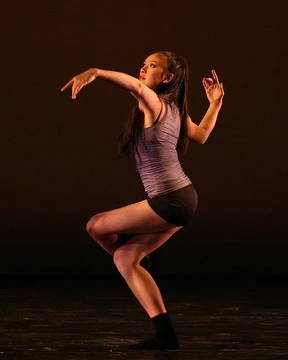
Agrippina Vaganova
Creator of the Vaganova method of classical ballet training.

via Wikipedia: Agrippina Vaganova · see source
Agrippina Yakovlevna Vaganova (26 June 1879 – 5 November 1951) was a Russian and Soviet ballerina, teacher, and choreographer, widely regarded as one of the most influential ballet pedagogues of the 20th century. She developed the Vaganova method, a system of classical ballet training that remains foundational worldwide.
- born
- 26 June 1879
- died
- 5 November 1951
- field
- Ballet
- nationality
- Russian and Soviet
- known_for
- Vaganova method of classical ballet training
Verified Timeline
Lore & Background
Agrippina Vaganova was born in Saint Petersburg, the youngest of three daughters in a working-class family. Her father, Akop (Yakov Timofeyevich) Vaganov, was an ethnic Armenian from Astrakhan who served as a non-commissioned officer before working as an usher at the Mariinsky Theatre. Her mother was Russian, and the family lived in modest circumstances near the theatre. In 1890, she entered the Imperial Ballet School, where her teachers included Lev Ivanov, Christian Johansson, Yekaterina Vazem, Pavel Gerdt, and Evgenia Sokolova. Although she lacked what was then considered the ideal ballet physique, her precision, musicality, and perseverance earned her distinction among her peers. She graduated in 1897 and joined the corps de ballet of the Mariinsky Ballet. Vaganova danced for nearly two decades at the Mariinsky Theatre, excelling in virtuosic solo roles and earning the nickname 'queen of variations' for her performances in Coppélia, La Bayadère, Don Quixote, and La Source. She achieved the rank of prima ballerina in 1915. Her relationship with ballet master Marius Petipa was complex—his diaries record her technique as 'brilliant' but her style as 'unyielding.' After the October Revolution (1917), ballet's survival in Russia was uncertain. Vaganova began teaching in small studios and, from 1921, at the state Leningrad Choreographic School—the renamed Imperial Ballet School. She gradually developed a codified training system synthesizing the lyricism of the old French school, the athleticism of the Italian tradition, and the expressive upper-body coordination she prized in Russian dance. In 1934, she published The Fundamentals of Classical Dance, which remains a standard text. When Nazi Germany invaded the Soviet Union in 1941, both the Kirov Theatre Ballet Company and the Leningrad Choreographic School were evacuated from besieged Leningrad to Molotov (now Perm). Agrippina Vaganova remained in the city during the early months of the blockade but later escaped the siege and arrived in Molotov on 13 April 1942, according to the Academy's own archive.
Reader's Guide
Agrippina Vaganova's significance lies in her creation of the Vaganova method, a codified system of classical ballet training that remains foundational worldwide. Her teaching emphasized clarity of line, expressive épaulement, and the integration of arms, head, and torso with leg movements. The method synthesizes elements from the French, Italian, and Russian traditions, and her 1934 textbook The Fundamentals of Classical Dance remains a standard reference. The Vaganova system has influenced national academies in Ukraine, Germany, China, and the United States, as well as leading companies such as the Bolshoi Ballet, American Ballet Theatre, and National Ballet of Canada. In 1957, the Choreographic School at 2 Rossi Street was renamed the Vaganova Academy of Russian Ballet in her honor, cementing her legacy as one of the most influential ballet pedagogues of the 20th century.
Did You Know?
- Her father, Akop (Yakov Timofeyevich) Vaganov, was an ethnic Armenian from Astrakhan who worked as an usher at the Mariinsky Theatre.
- She earned the nickname 'queen of variations' for her performances in Coppélia, La Bayadère, Don Quixote, and La Source.
- Marius Petipa's diaries record her technique as 'brilliant' but her style as 'unyielding.'
- She arrived in Molotov (now Perm) on 13 April 1942 after escaping the siege of Leningrad.
- In 1957, the Choreographic School at 2 Rossi Street was renamed the Vaganova Academy of Russian Ballet in her honor.
More in Dance Pioneers 1-23
Spotted an error? Know more?
This is a living reference — every entry is fact-audited, and reader corrections feed straight into our audit queue. Suggest an edit · See this site's audit record